
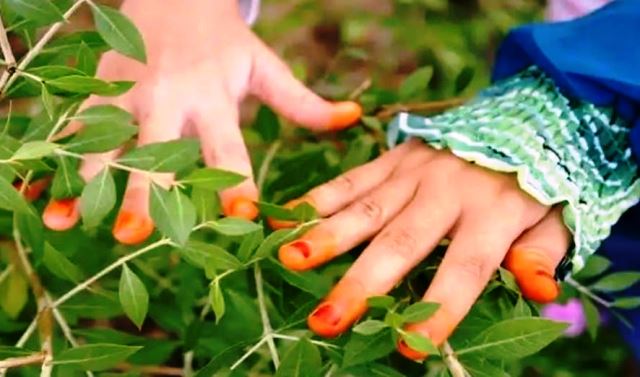
The tradition of melattigi and mattunu pallang when Ramadan began to disappear in West Sulawesi. The government is expected to preserve this unique culture.
Ramadan is a moment that has always been awaited by the community, including in West Sulawesi. In this holy month unique traditions are usually carried out by the people of West Sulawesi, one of which is melattigi. This is a tradition of hand painting to nails with henna or henna leaves, which have been finely ground. This local wisdom is mostly practiced by young women. Sulbar girls, especially the Mandar tribe, usually wrap their fingers attached with henna with banana leaves so that the resulting color is more contrasting.
The young men usually do Mattunu Pallang or burn torches made from bamboo. The torch was then placed in the yard, as one of the symbols of happiness to welcome Ramadan. Unfortunately that tradition is rarely done by young West Sulawesi children.
Yet according to Sitti Reda, 66 years old, the tradition of melattigi is like something that must be done by women both teenagers and old people in ancient times. In fact, not infrequently young men also follow. "It is now rare for people to practice before Ramadan. Even if there are only a few parents," said the resident of Lembang, Sendana Subdistrict, Majene, when met at his residence on Friday, March 10, 2020.
Reda said, the tradition of melattigi flourished in the 1980s. After that the melattigi tradition was gradually abandoned. One of the triggers is the emergence of pros and cons in society about religion issues from the religious side. "Some say they can ablution so that the prayers are invalid," he said.
Hanapi, 54, a resident of Totolisi Sendana Village also sees the tradition of Mattunu Pallang or Sulo when Ramadan is rarely practiced by young people. Even though when Hanapi was a teenager, that tradition was very popular with Ramadan. "Usually sulo is installed near the front steps of the house," he said, Friday, March 10, 2020.
According to Hanapi, the torch was made of small bamboo, about 50 centimeters long. At the end of the bamboo, there is a fruit known by the people of Mandar named Punaga. "If this fruit is burned it can last some time," he said.
Cultural observer of West Sulawesi Muhammad Ishak said melattigi and mattunu pallang are part of the ancestral local wisdom order in interpreting every natural event, religious event, and other events. Therefore, Ishak hopes that the government will not neglect seeing the unique traditions in West Sulawesi begin to disappear in the community.
The government, according to him, must be able to restore this tradition so that it can become a legacy for children and grandchildren later. "Local wisdom like that must be noted and again encouraged to be applied by citizens so that it becomes data for cultural heritage in West Sulawesi," Ishak said on his cellphone on Friday, March 10, 2020.
Ishak added, the tradition of melattigi and mattunu pallang is actually still practiced by some corners of the village. "Only there is indeed a shift in values due to factors in communication and technology development in the community," said the citizen of Kandeapi, Polewali Mandar. Ishak added, the tradition should have been encouraged to not become extinct. "We Mandar people, it should be wise to catch the agreed event as a local cultural specialty."
Haslan Syahrir





Comments For This News (0)
Post a comment